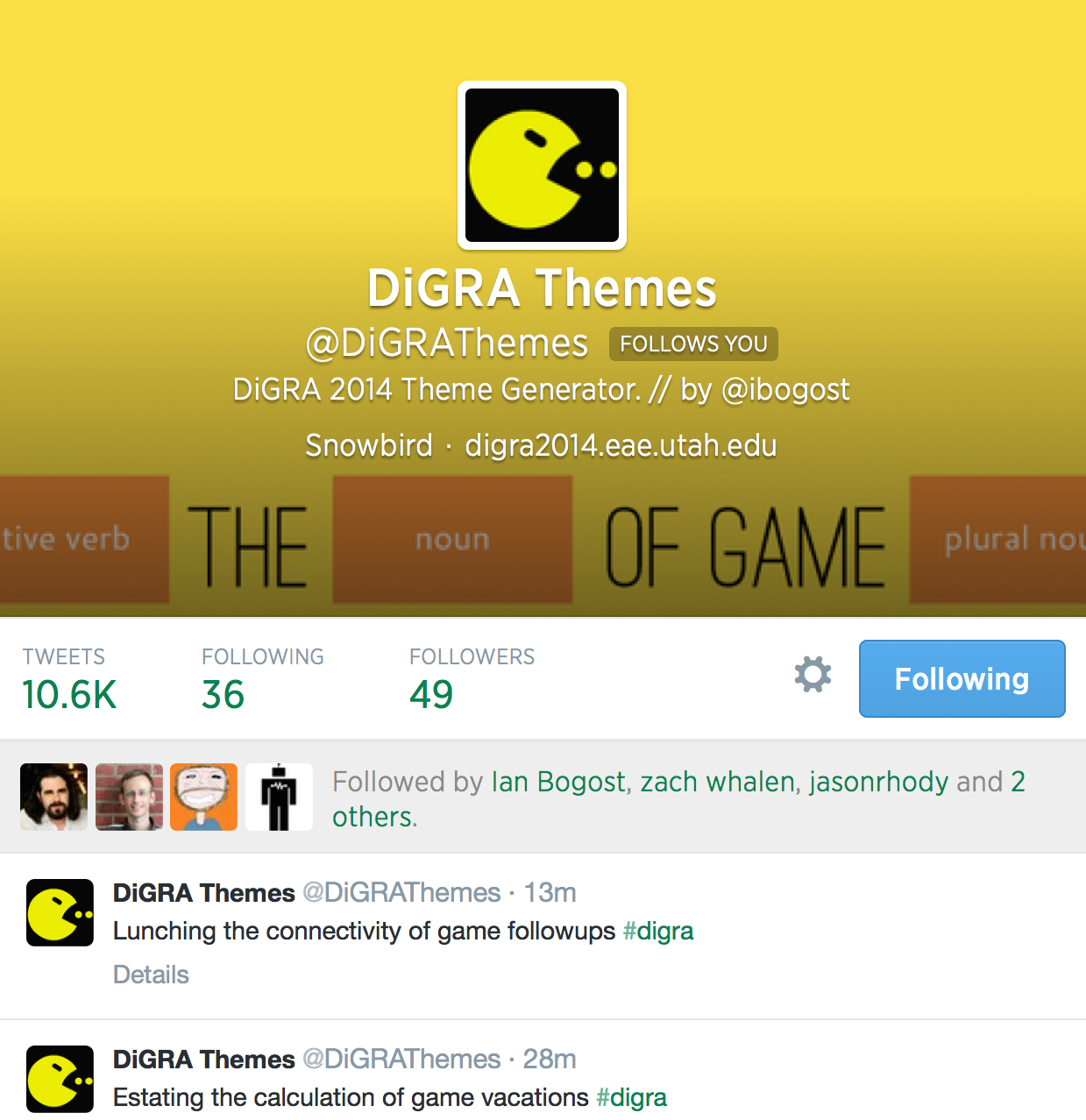
To such end the theme of DiGRA 2014 is a phrasal template
<Verb that ends in ‘ing’> the <noun> of Game <plural noun>
For DiGRA’s 2014 Conference we playfully emphasize work that explores non-traditional questions, peers between the cracks of areas that are starting to become well-worn, and revisits old themes from new perspectives. In other words, what has been overlooked or otherwise not given the care and respect it deserves? A Mad Lib is a word game in which one player asks another for nouns, verbs, and other parts of speech with little or no context. They then proceed to fill in the blanks of a phrasal template to often humorous and sometimes profound results. As game scholars we have worked hard to figure out what were the most important blanks. However, at this, the seventh DiGRA conference, we invite you to point out the blanks that have yet to be filled. Your answers to our Mad Lib theme could highlight the profound, sublime, or humorous. We encourage you to trying working the theme into the title of your work.
One can hope that this CFP inspired new ideas in the audience-- the program hasn't been published on their site yet-- but it is also likely that academics simply recast familiar areas of inquiry into this playful format. Years of focused research tend to leave deep grooves in a scholar's consciousness. This is why @DiGRAThemes is important: by endlessly, exhaustively recombining the possibilities of the phrasal template it offers up and themes that people are unlikely to come up with themselves.
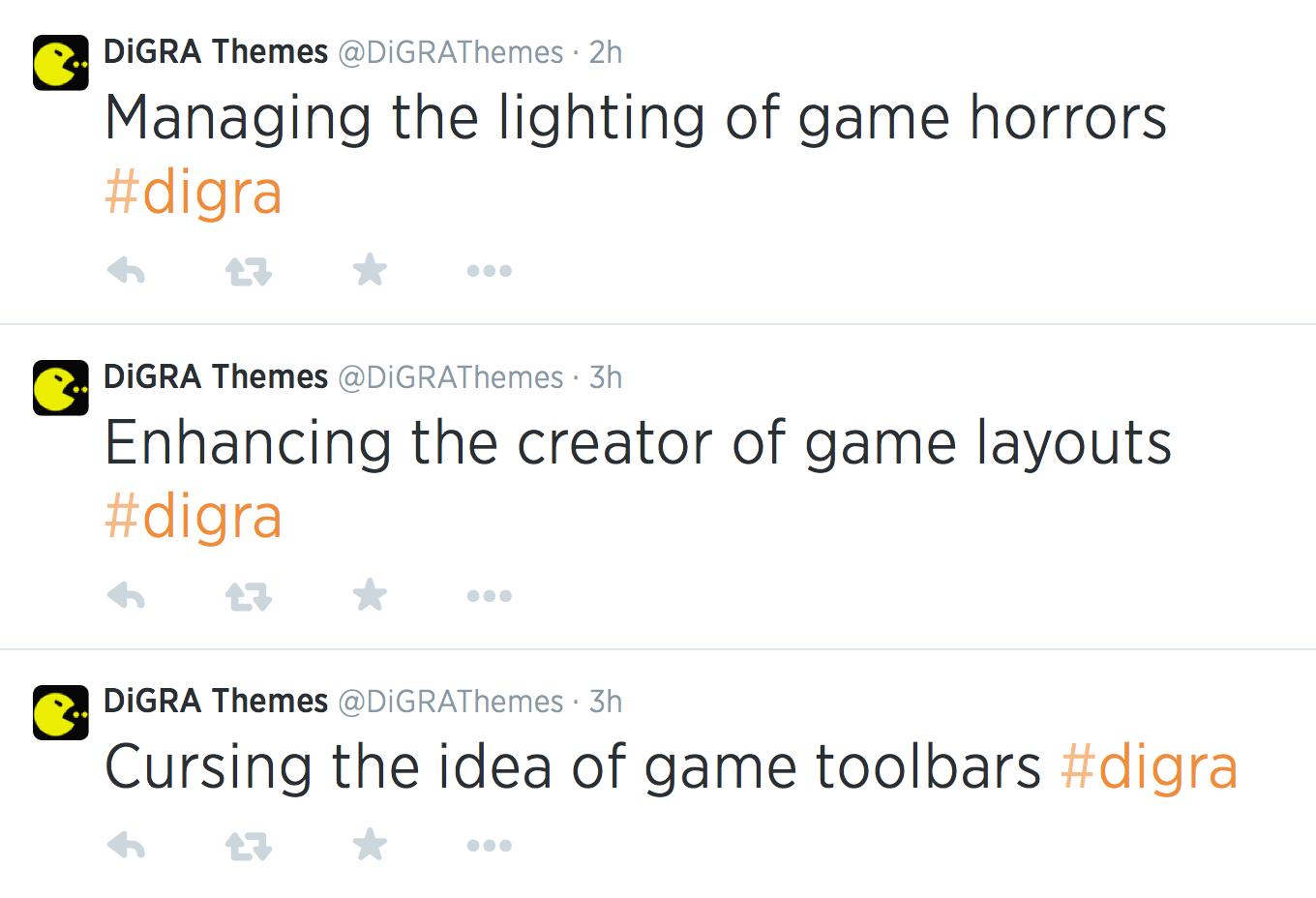
Aside from the potential for absurd or non-sequitur based humor in the themes produced by this bot, there is plenty of room for inspiration here, even with partial successes. Readers well versed in Game Studies as steeped enough in the discourse that their trained minds can't help but build on even partial ideas, or ask questions about the possibilities. How is lighting managed in horror games? Who creates game layouts and how can we enhance what they do? How have game toolbars been conceptualized and how have they harmed gaming experiences?
This bot enacts what Bogost calls procedural rhetoric, developed in his book Persuasive Games, and discussed in this recent video produced at UC Santa Cruz: "Procedural rhetoric entails translating systems that exist in the real world into a digital format, and learning about those systems through exploration and play." This bot's translation of the field's systematic thought patterns invites readers to play along by reading its tweets and breathing life into its imperfect, surprising ideas.
Featured in: Genre: Bot